
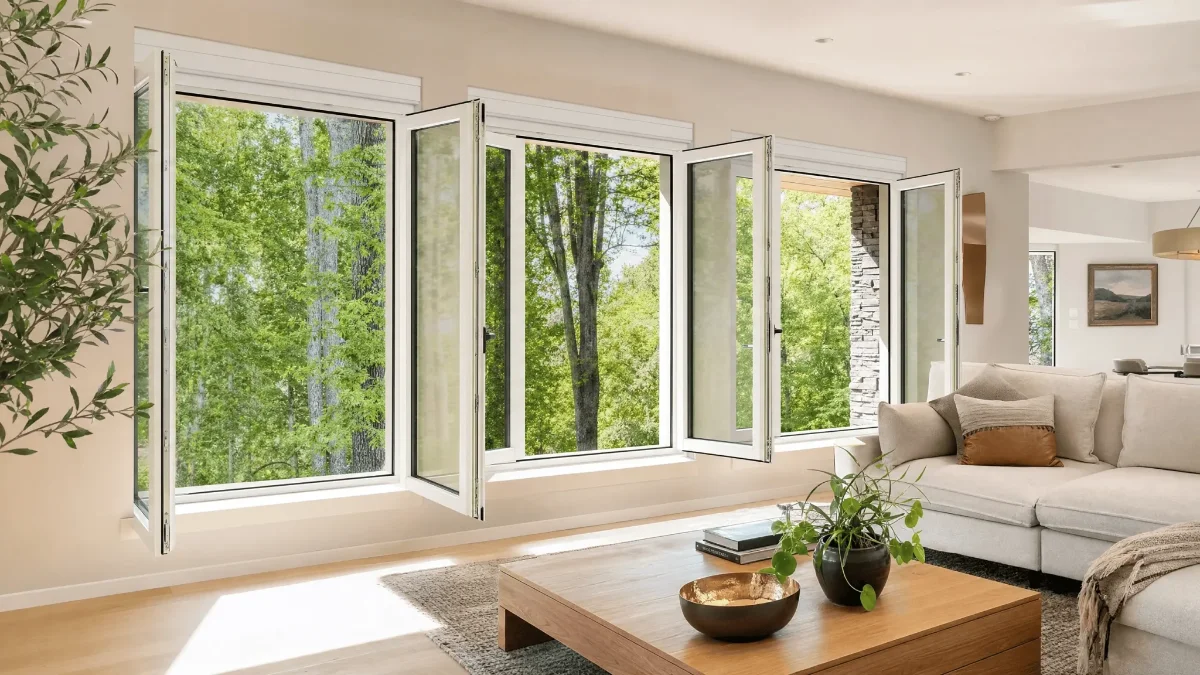
If you’re comparing tilt and turn windows vs. casement windows for your Maryland home, you’re already asking the right question. Both styles offer better ventilation, tighter seals, and a cleaner look than older double hung windows, but they work very differently. And the one that’s right for you depends on the room, your home’s style, and how you actually use your windows day to day.
How Casement Windows Work
Casement windows are hinged on one side and swing outward when you turn a crank handle at the bottom of the frame. It’s a simple, reliable design that’s been popular in American homes for decades. When you crank one fully open, you get the entire window opening working as an airscoop, which makes casements excellent for catching a breeze.
You’ll find casement windows in kitchens, bedrooms, and living rooms all across Annapolis and Anne Arundel County. They’re especially common over kitchen sinks because you can operate them with one hand. When they’re closed, the sash presses firmly against the frame, creating a solid seal against wind, rain, and cold air.
Cleaning is where casements have a small drawback. To clean the outside glass, you either need to reach around the open sash or go outside entirely. Some casement models include a tilt-wash feature that helps with this, but it’s not universal. On upper floors, that outside glass can be a real hassle to reach.
How Tilt and Turn Windows Work
Tilt and turn windows are a European design that’s grown steadily in popularity across Maryland and the rest of the U.S. They look like a standard window from the outside, but the hardware inside gives you two completely different opening modes. That’s what makes them unique.
In tilt mode, the top of the sash tilts inward a few inches. You get fresh air flowing in from the top without a wide opening. This is great for rainy days, cool nights, or any time you want ventilation without leaving a large gap. In turn mode, the entire sash swings inward like a door, giving you full access to the opening and to both sides of the glass.
The hardware on a tilt and turn window is more complex than a casement. There’s a single handle that controls which mode you’re in, and it has multipoint locking built in. It takes a minute to get used to, but once you do, it’s very intuitive. You can learn more about the specifics on the tilt and turn windows from Window Depot of Annapolis page.
Tilt and Turn Windows vs. Casement Windows: Ventilation
This is usually the first thing Maryland homeowners want to know. Both styles handle ventilation well, but they do it differently. A casement window in full open position acts almost like a funnel, directing outdoor air into the room. It’s hard to beat for raw airflow on a nice day.
Tilt and turn windows give you two levels of control. In tilt mode, you’re getting a steady, quieter flow of air from the top, which many people prefer at night or during light rain. In turn mode, you get a full opening that matches a casement for maximum airflow. So tilt and turn windows are actually more flexible when it comes to ventilation options.
(If you live near the Chesapeake Bay or in a neighborhood where afternoon thunderstorms are common, that tilt mode is genuinely useful. You can keep air moving without worrying about rain coming in sideways.)
For pure maximum airflow on a dry, breezy Maryland afternoon, casements and tilt-and-turn in turn mode are about equal. For controlled, everyday ventilation that works in more conditions, tilt and turn has the edge.
Tilt and Turn Windows vs. Casement Windows: Cleaning and Maintenance
Cleaning is one area where tilt and turn windows have a clear advantage. In turn mode, the entire sash swings inward, so both the inside and outside surfaces of the glass are fully accessible from inside your home. No ladder. No reaching around. No going outside.
Casement windows, especially on the second floor or higher, require some effort to clean the outside glass. You can lean out around the open sash, but it’s awkward and sometimes not practical at all. Some models have a tilt-wash function, but it varies by manufacturer.
For Maryland homeowners with two-story homes in Crofton, Severna Park, or Edgewater, this difference is worth taking seriously. If easy maintenance matters to you, tilt and turn wins this category without much debate.
Security, Energy Efficiency, and Cost
Security is solid with both window types. Casement windows lock at multiple points around the frame when closed, and the sash-to-frame contact makes them very resistant to forced entry. Tilt and turn windows also use multipoint locking hardware, and the tilt mode lets you have fresh air without opening the window wide enough for anyone to reach through. Both styles are genuinely secure choices.
Energy efficiency is another area where both styles perform well, especially with the right glass package. Tilt and turn windows are known for their exceptionally tight seals, which comes from the precision engineering standards behind the European design. Casement windows also seal tightly when closed, more so than double hung windows, because there’s no sliding sash. According to the U.S. Department of Energy through ENERGY STAR at energystar.gov, proper window sealing and glazing choices have a significant impact on home energy costs, and both casement and tilt-and-turn styles can qualify for top efficiency ratings when paired with the right glass.
Window Depot of Annapolis offers triple pane glass at dual pane prices for both styles. That’s an unusual value in this market, and it’s part of why their windows carry the ENERGY STAR Most Efficient certification. You can browse the full replacement window options from Window Depot of Annapolis to see what’s available across both styles.
Cost is where tilt and turn windows tend to run slightly higher than casements. The more complex hardware and European engineering add a little to the price. But both styles are available through Window Depot of Annapolis with the Best Price Promise, which means if you find a lower price within six months, you get a refund plus $500. That removes a lot of the stress from comparing prices.
Aesthetics: Which Style Fits Your Maryland Home?
Casement windows have a classic American look that fits traditional, colonial, and transitional homes very well. You’ll see them on craftsman bungalows, cape cods, and brick colonials all over Annapolis and the surrounding communities. They’re familiar, clean-lined, and widely available in a range of colors and finishes.
Tilt and turn windows have a more modern, European aesthetic. The hardware and frame design is sleeker, with minimal visible components. They tend to look especially sharp on contemporary homes, newer construction, and any home where the owner is going for a clean, updated look.
Both styles come in multiple colors and finishes, so you’re not locked into one look just because of the operating style. It really comes down to the feel you want for your home.
Which Window Style Is Better for Maryland Homes?
Maryland weather is specific. Humid summers, cold winters, spring storms rolling in off the Chesapeake, and plenty of afternoons where the temperature swings more than you’d expect. Both casement and tilt and turn windows handle Maryland conditions well when they’re installed correctly with good glass packages.
Here’s the honest breakdown. Casement windows are the better fit for homeowners who want maximum airflow, a traditional American look, and a simpler operating mechanism. They’re a proven, widely trusted choice in Anne Arundel County and across Maryland, and they work beautifully in kitchens, bedrooms, and main living areas.
Tilt and turn windows are the better fit for homeowners who want easy cleaning from inside, controlled ventilation for rainy days and nighttime, and a modern European aesthetic. They’re especially practical on upper floors and in rooms where getting outside to clean the glass isn’t realistic. If you’ve been curious about the energy performance side of this style, the blog post on why European style windows are the best windows for energy efficiency in Maryland goes deeper on that topic.
The truth is, many homeowners use both styles in the same house. Casements in the kitchen and living areas, tilt and turn in upstairs bedrooms. There’s no rule that says you have to pick one. A conversation with the team at Window Depot of Annapolis can help you figure out what makes sense room by room.
Frequently Asked Questions
Are tilt and turn windows harder to operate than casement windows?
Not really, once you’re used to them. Both styles use a single handle mechanism. Casement windows use a crank to push the sash outward. Tilt and turn windows use a handle that rotates to switch between tilt mode, turn mode, and locked. It takes one or two tries to get the hang of it, but most homeowners find it very easy after that. Window Depot of Annapolis walks every customer through the operation during installation.
Which window style is better for ventilation in a Maryland summer?
Both styles ventilate well, but they do it differently. Casement windows in full open position funnel a strong breeze into the room, which is great on dry, warm days. Tilt and turn windows in tilt mode give you steady, controlled airflow without a fully open sash, which is useful during the humid, stormy Maryland summers when you want air moving but don’t want rain coming in. For pure best windows for ventilation on a clear day, they’re about equal in turn mode.
Can I get tilt and turn windows installed in my existing Maryland home?
Yes. Tilt and turn windows can replace most standard window openings as part of a window replacement Maryland project. Window Depot of Annapolis handles tilt and turn window installation using AWDI-certified in-house installers, not subcontractors. That matters because proper installation affects how well the window performs, seals, and holds up over time. A free estimate will confirm whether your openings are a good fit.
How do casement windows and tilt and turn windows compare for energy efficiency?
Both styles seal tightly when closed, which gives them an advantage over double hung windows. Tilt and turn windows tend to have exceptionally tight seals because of the precision multipoint locking hardware. Casement windows also seal well against the frame when locked. Window Depot of Annapolis offers triple pane glass at dual pane prices for both styles, which gives you a significant energy efficiency upgrade regardless of which style you choose.
Is there a price difference between casement and tilt and turn windows?
Tilt and turn windows typically cost a bit more than casement windows because of the more complex hardware and engineering involved. That said, the difference isn’t dramatic, and both styles are available through Window Depot of Annapolis with the Best Price Promise. If you find a lower price on a comparable window within six months of your purchase, Window Depot of Annapolis will refund the difference and give you an additional $500. It’s a straightforward way to shop with confidence.
Not Sure Which Window Style Is Right for Your Home?
Window Depot of Annapolis helps Maryland homeowners compare window styles without pressure. Our team explains what fits your home, your budget, and your daily routine. Schedule a FREE consultation at windowdepotmd.com and get honest answers from AWDI-certified window experts.
You can schedule a free window estimate with Window Depot of Annapolis right now at windowdepotmd.com/free-estimate. No pressure, no obligation, just a straight conversation about what works for your home.

